Area of expertise

Business Acumen for Manufacturing

When capital is tied up long before revenue appears — helping manufacturing leaders align strategic, operational, and commercial decisions.
Contact us

Manufacturing organizations operate under a unique set of pressures

A 3% shift in inventory days can release millions in cash, or quietly consume it. Increasing batch sizes to improve margin can quietly weaken cash flow. A discount granted to protect revenue can erode contribution.

None of these decisions are wrong in isolation. In manufacturing, isolation is the problem.

Most manufacturing organizations are asset rich by design. They invest heavily in plant, equipment, and capacity that must be utilized, maintained, and paid for over time.

Capital is tied up long before revenue appears. Cash, inventory, capacity, and delivery are always in tension. Decisions in one function set consequences in motion for working capital and performance elsewhere.

In this environment, business acumen is not about understanding finance in isolation. It is about understanding how strategic, operational, and commercial decisions translate into profit, cash flow, and working capital over time.

Manufacturing decisions shape financial outcome

In manufacturing, operational choices around capacity, inventory, sourcing, and delivery directly affect profit, cash flow, and working capital. Business acumen means understanding these connections before they appear in the financial results.

Trade-offs are unavoidable

Manufacturing leaders constantly balance competing goals. Improving service levels can increase inventory. Maximizing utilization can reduce flexibility. Business acumen develops when people understand the consequences of these trade-offs across the system.

Shared judgment drives performance

Strong manufacturing performance depends on aligned decision-making across functions. When teams share the same business logic, trade-offs are made consciously, friction is reduced, and execution becomes more consistent over time.

Decisions in manufacturing must be made with organizational-level consequences in mind.

What is at stake in manufacturing

When business acumen is weak, manufacturing organizations rarely fail loudly. They lose performance quietly.

Value leaks through everyday decisions that make sense locally but create system-wide consequences over time. Working capital is consumed, margins erode, and capacity is underutilized without anyone feeling directly responsible.

Strong business acumen does not remove trade-offs. It changes how consciously they are made.
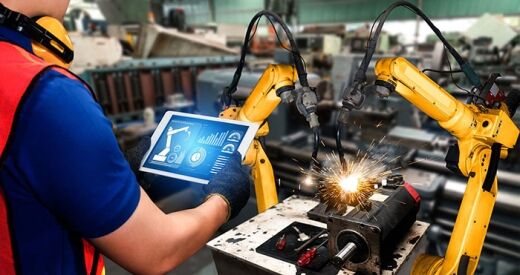
Smart manufacturing robot performing a production task

Value leaks through misaligned decisions

When sales, operations, supply chain, and finance optimize separately, decisions collide. Inventory builds to protect service. Premium freight offsets capacity constraints. Margin disappears through small, rational compromises that accumulate over time.

Business acumen makes these interactions visible before the numbers appear in the financials.

Working capital becomes a shared responsibility

In manufacturing, cash is shaped long before invoices are issued.
Inventory policies, production choices, sourcing decisions, and payment terms all interact.

Without shared understanding, working capital is managed after the fact.
With strong business acumen, it is managed through decisions.

Execution slows when judgment is fragmented

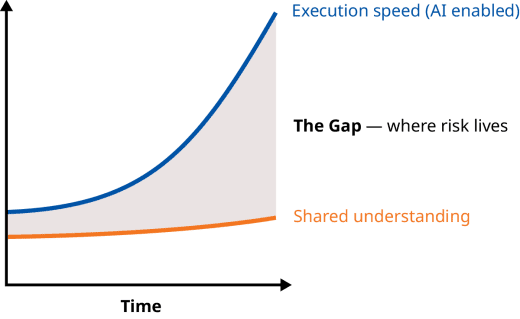
Most organizations are not short on expertise. They are short on alignment.

When teams lack shared judgment, decisions take longer, trade-offs are revisited repeatedly, and execution becomes inconsistent. Performance suffers not because people disagree, but because they reason differently.
Organizations don’t lose performance through individual bad decisions alone. They lose it when decisions are unaligned.

From functional excellence to organizational capability

Most manufacturing organizations are filled with capable specialists across operations, supply chain, engineering, sales, and finance.

What limits performance is rarely a lack of knowledge. It is a lack of shared judgment.

As complexity increases and execution speeds up, organizations become constrained by their ability to align decisions across functions and over time.

Functional excellence is not enough

Manufacturing organizations invest heavily in developing expertise within functions. Operations improve efficiency. Supply chain optimizes flow. Finance strengthens control.

Yet when each function applies its own logic in isolation, decisions that look correct locally can conflict system-wide. Performance suffers not because people lack skill, but because reasoning is fragmented across functions.

Decisions span time, not just functions

Many manufacturing decisions create effects that unfold slowly. Capacity investments, inventory policies, sourcing choices, and pricing decisions rarely show their full impact immediately.

Business acumen requires understanding how today’s decisions shape tomorrow’s constraints, trade-offs, and financial outcomes across the organization.

Shared judgment enables consistency

When leaders and managers share a common understanding of how value is created, trade-offs become easier to navigate.

Decisions become faster, more consistent, and more resilient under pressure. The organization stops relying on heroic individuals and starts relying on shared logic.
Business acumen becomes an organizational capability when people reason about decisions the same way, even when they disagree.

How CELEMI builds business acumen in manufacturing

Business acumen in manufacturing cannot be built through explanation alone. It requires people to experience how decisions interact, how trade-offs accumulate, and how financial consequences emerge over time.

CELEMI builds business acumen through business simulations that mirror the realities of manufacturing organizations. Participants lead companies, make decisions under constraint, and experience the consequences as they unfold across profit, cash flow, and working capital.

Cause and effect are not explained after the fact. They become visible through action.
Close-up of CELEMI Decision Base™ business simulation

Functional excellence is not enough

CELEMI simulations place participants in realistic manufacturing environments where strategic, operational, and commercial decisions must be made with limited information, competing priorities, and real constraints.

As the simulation progresses, results emerge from decisions taken. Participants see how today’s choices shape tomorrow’s outcomes across the entire system.

Trade-offs become explicit

In manufacturing, trade-offs are unavoidable. What matters is whether they are made consciously or by default.

CELEMI simulations force trade-offs into the open. Inventory, capacity, service levels, pricing, and investment decisions interact in ways that cannot be optimized locally. Participants experience the tension directly and learn to reason about it systemically.

Shared judgment is built through facilitation

Experience alone is not enough. Insight must be aligned.

Facilitation is a core part of how CELEMI works. Skilled facilitators use the simulation as a shared reference point to surface assumptions, challenge reasoning, and connect outcomes back to decisions and trade-offs.

Through structured reflection and dialogue, teams develop shared mental models that shape how they think, decide, and act in their real roles.
Business acumen is built when people experience the same decisions, see the same consequences, and develop a shared logic for acting under pressure.

For manufacturing organizations looking to implement business acumen training

CELEMI simulations are designed specifically for manufacturing realities, including:
Capital-intensive operations
Working capital pressure and optimization
Inventory buildup and release across the value chain
Fixed and variable cost structures
Long decision cycles and delayed consequences
Cross-functional dependencies
This makes the learning immediately recognizable and directly transferable to your organization.

Products with strong manufacturing alignment

© Celemiab Systems AB 2024. The trademarks and brand names displayed on this Website are the property of Celemiab Systems AB, its affiliates or third party owners. You may not use or display any trademarks or brand names owned by Celemiab Systems AB without our prior written consent. You may not use or display any other trademarks displayed on this Website without the permission of their owners.
crossmenuarrow-left-circle